Download Wuthering Waves APK 3.3.1 Free for Android
HK KURO GAMES LIMITED APK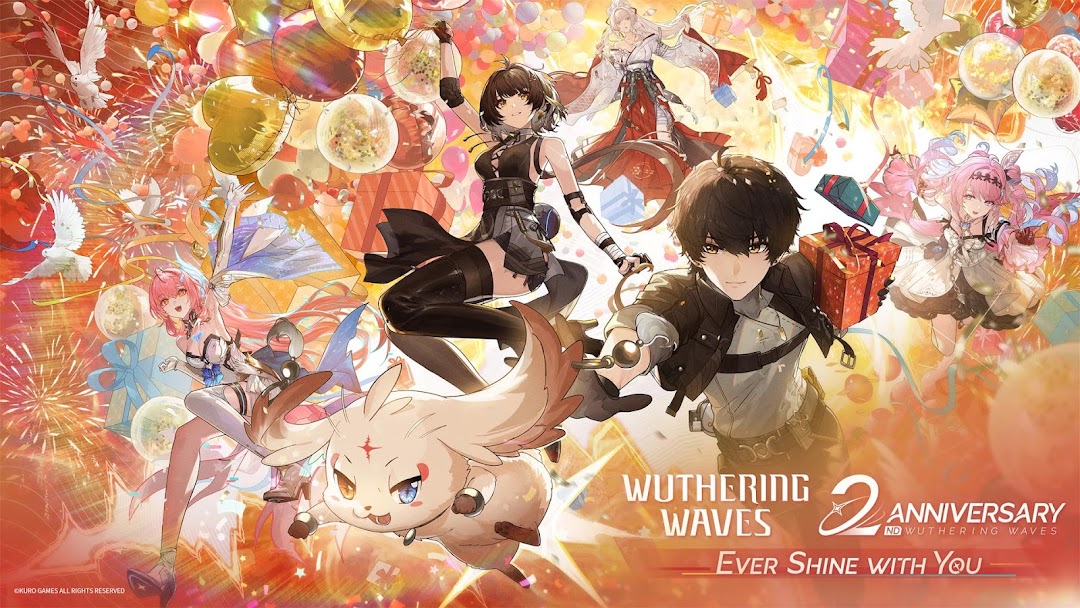
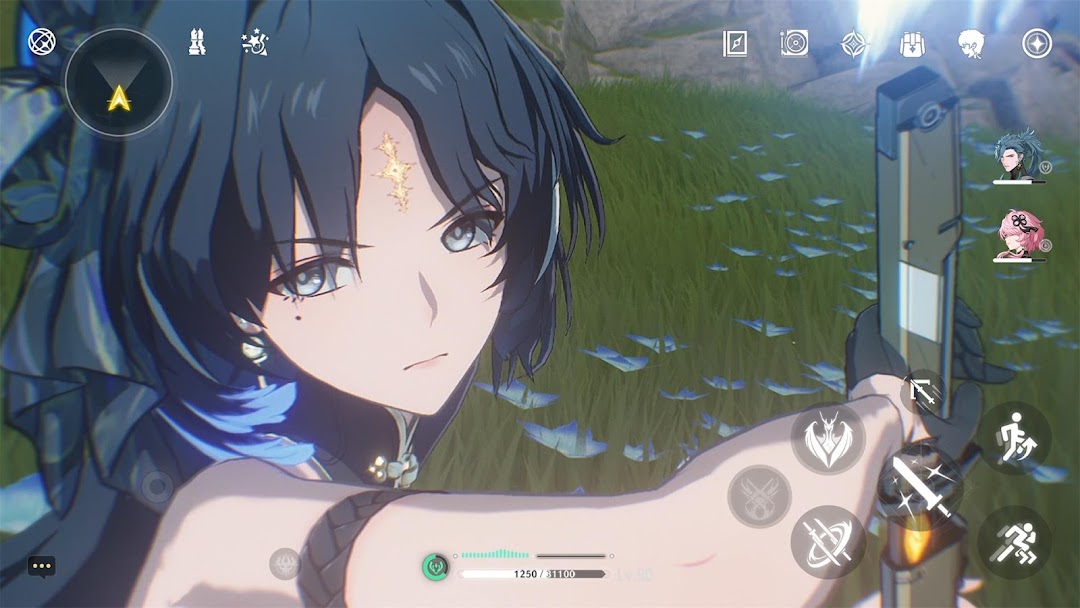
| Tên | Wuthering Waves - 2nd Anniv. |
|---|---|
| Nhà phát hành | HK KURO GAMES LIMITED |
| Phiên bản | 3.3.1 |
| Kích thước | 1.79GB |
| Yêu cầu | Android 7.0 |
| Google Play | Google Play ↗ |
| Danh mục | Role-Playing |
| Lượt tải | 4 |
| Giá | MIỄN PHÍ |
| Đánh giá |
★
★
★
★
★
0/5
(0)
|
| Tác giả | |
| Cập nhật |
Version 3.3.1, released April 30, 2026, opened the second anniversary of Wuthering Waves with two new Resonators, the Dimmr Plains zone, and an Expedition Motorbike collaboration.
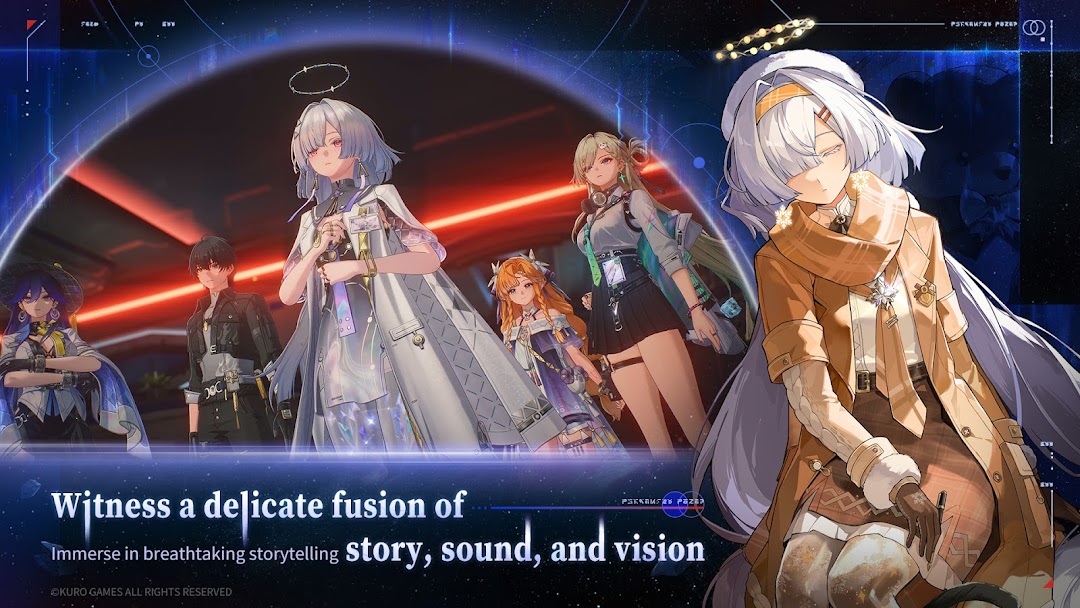
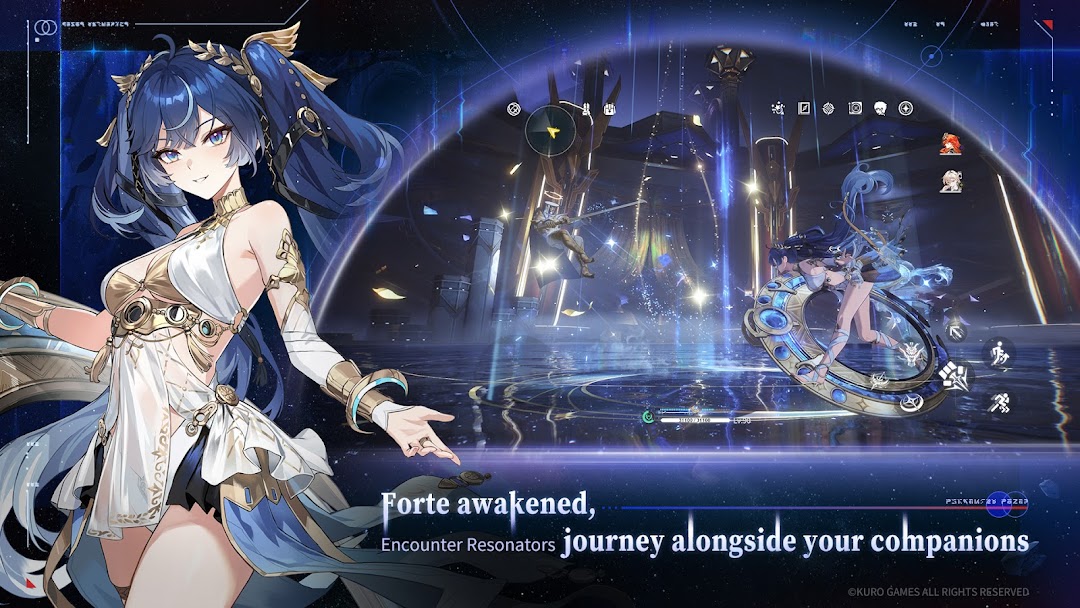
Wuthering Waves is an open-world action RPG from Kuro Games, the Guangzhou studio behind Punishing: Gray Raven, with Version 3.3.1 live on Android since April 30, 2026. You play as Rover, an amnesiac protagonist waking into the post-cataclysm world of Solaris-3, building a team of characters called Resonators. The combat is swap-based and dodge-heavy rather than turn-based, closer to a character-action game than a menu RPG. The title runs free-to-play with a gacha layer called Convene, and it is cross-platform across Android, iOS, PC (Steam, Epic, the Kuro launcher), PS5, and Mac, with Xbox Series S and X arriving in July 2026. It won the Players’ Voice award at The Game Awards 2025 and Google Play’s 2025 Best Ongoing.
- Forty-six Resonators across six elements and five weapon types
- Concerto Energy and the swap-driven combat behind every fight
- Echoes turn defeated monsters into gear, abilities, and set bonuses
- Solaris-3 exploration: gliding, wall-running, and the Expedition Motorbike
- How does Convene pity guarantee a 5-star within 80 pulls?
- What’s new in Wuthering Waves 3.3.1
- Wuthering Waves MOD APK features
- Frequently asked questions
Forty-six Resonators across six elements and five weapon types
Wuthering Waves runs 46 playable Resonators as of Version 3.3.1, and team-building hinges on matching their six elements rather than collecting everyone. The elements are Aero, Electro, Fusion, Glacio, Havoc, and Spectro, and stacking two or three same-element characters unlocks stronger Concerto Effects on swap. Most teams settle into three roles: a main DPS who holds the field, a sub-DPS or amplifier who buffs through an Outro skill, and a sustain unit for shields or healing.
Every Resonator also carries one of five weapon types, which decides their attack pattern and which signature weapons fit:
- Broadblade: heavy, slow swings with strong stagger, used by characters like Mornye and Chisa.
- Sword: balanced reach and speed, the most common type across the roster.
- Pistols: ranged poke and quick energy generation on 4-star units like Chixia and Aalto.
- Gauntlets: close-range burst with fast hit counts, seen on Iuno and Yuanwu.
- Rectifier: a caster-style weapon that drives many support and Havoc damage units, including Denia and Phrolova.
The point most roster pages skip is that rarity does not equal power slot. Several 4-star Resonators (Baizhi for Glacio healing, Yuanwu for shielding) stay in endgame teams long after you pull 5-stars, because their Outro buffs feed a main DPS more value than a second damage carry would. When you start, prioritize one strong main DPS and one amplifier in a matching element before chasing breadth.
Concerto Energy and the swap-driven combat behind every fight
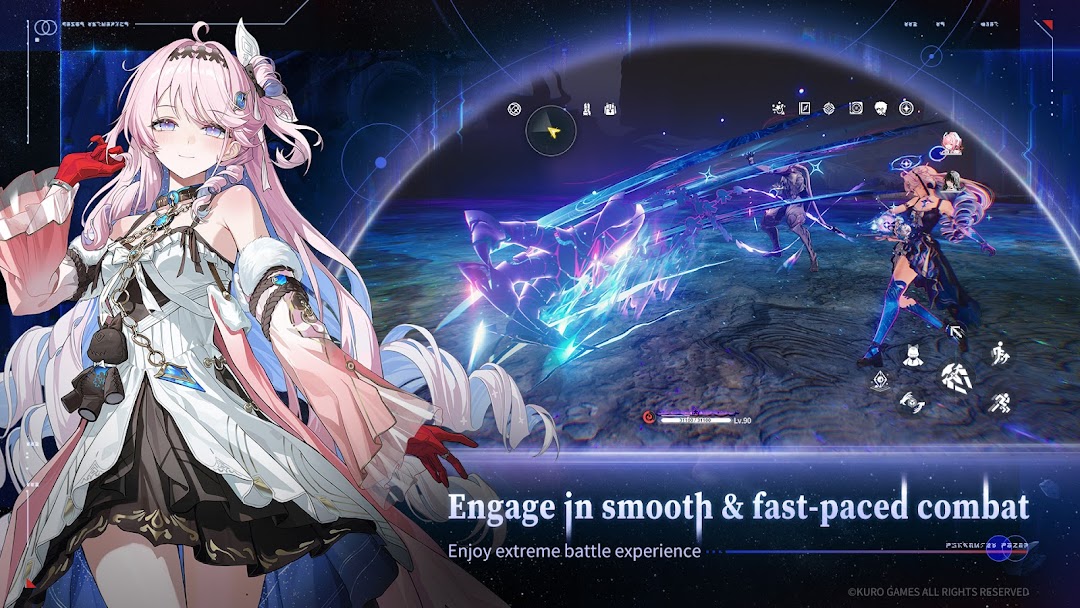
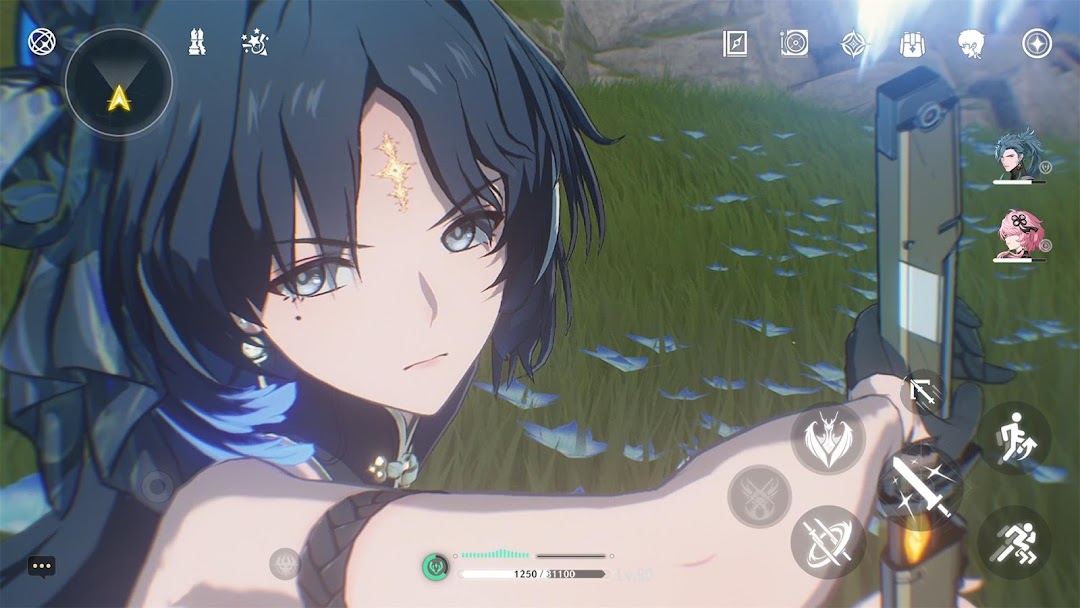
Combat in Wuthering Waves is built around three separate energy bars, and learning when to swap is what separates a smooth clear from a sloppy one. Each Resonator has a Basic Attack, a Resonance Skill, a Resonance Liberation (the ultimate), a Forte Circuit gauge, and Intro and Outro skills tied to swapping. Dealing damage and using Echo Skills fills the Concerto bar above your HP. Once it is full, swapping out triggers that character’s Outro buff and the incoming character’s Intro skill in one motion.
The five Concerto Effects (Unison, Ensemble, Sustenance, Legato, and Duet) trigger based on your party’s element spread, so team composition directly changes which bonus you get on every rotation. Pairing an Aero carry like Jiyan with a Fusion unit like Mortefi, for example, fires the Heat Ensemble effect, raising the on-field character’s Attack and Crit Damage.
Resonance Energy is the third bar, and it is the only one the Energy Regen stat affects. You build it through skills, basic attacks, teammate Outros, and weapon passives, then spend it all at once on a Resonance Liberation. Off-field characters still gain 50% of on-field energy, which is why a fast generator left in the back can keep your support’s ultimate ready.
Defense is active, not passive. A Perfect Dodge (dodging at the last instant) grants roughly 3 Resonance Energy and slows time briefly, and a successful parry staggers heavy enemies. If you treat the game like a stat-check, hard bosses feel unfair; if you learn the dodge windows, the same fights become a rhythm.
Echoes turn defeated monsters into gear, abilities, and set bonuses
Echoes are the gear system, and unlike most gacha RPGs they double as a borrowed enemy ability you actively use in combat. When you beat a monster or boss, it can drop an Echo you equip for stat boosts plus one signature skill, so a Tempest Mephis Echo lets you summon its lightning attack, while a healing Echo gives a recovery burst on cooldown.
How many you can equip is capped by a COST budget tied to your Data Bank level, which scales from 8 up to 12 as you raise it. The COST tiers work like this:
- COST4 Echoes: elite and boss drops that carry the main combat skill. You usually run one per character.
- COST3 Echoes: mid-tier units used to fill secondary stat slots.
- COST1 Echoes: common drops that round out a five-Echo loadout cheaply.
Five matching Echoes form a Sonata set, the equivalent of an artifact set bonus, with Version 3.3.1 adding two new Sonata Effects to the pool. The detail that catches new players off guard, and that thinner guides leave out, is that farming raw Echoes costs zero Waveplates (the stamina resource). You only spend stamina to refine substats through Tacet Fields, so you can grind the open world for fresh Echoes as long as monsters are alive on the map. That makes Data Bank level, not stamina, the real bottleneck on building a team.
Solaris-3 exploration: gliding, wall-running, and the Expedition Motorbike
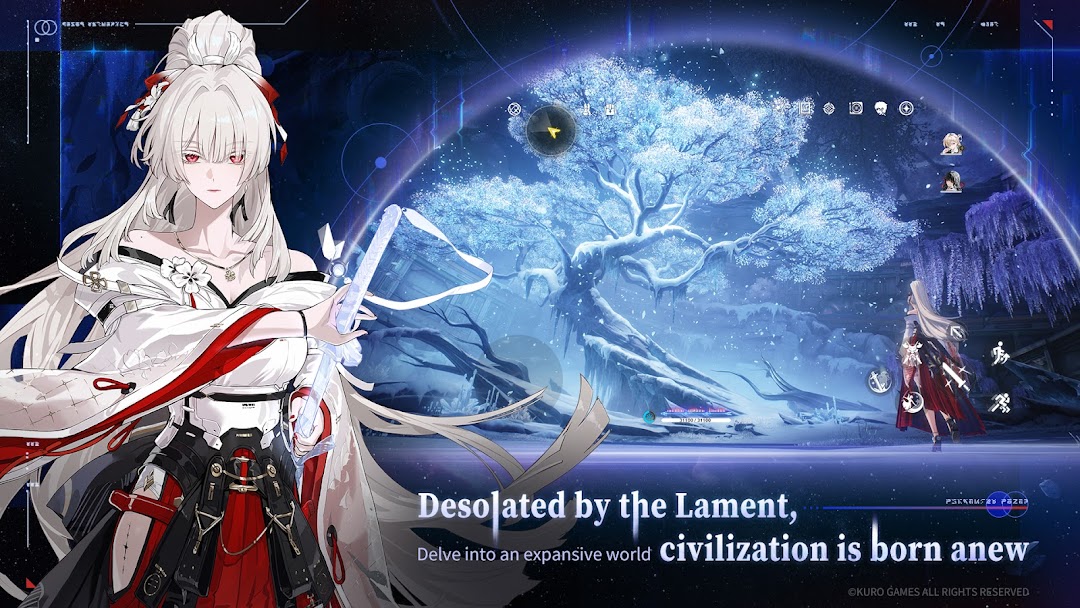
Traversal in Wuthering Waves is faster and more vertical than most open-world RPGs, because the climbing, gliding, and dash systems have no separate stamina drain on combat. You scale cliffs with a grapple point, wall-run across surfaces, glide with a wingsuit, and from Version 3.3.1 ride the Expedition Motorbike across the surface zones. The motorbike even received collaboration liveries themed to Resident Evil, PRAGMATA, and Angry Birds as part of the anniversary content.
The world itself spans several large regions, from the founding nation of Huanglong to the frozen Roya Frostlands introduced in Version 3.1, the science-fiction setting of Lahai-Roi opened in Version 3.0, and the new underground Dimmr Plains beneath the Bjartr Woods added in 3.3.1. Each region carries its own monster ecology, puzzle types, and Echo drops, so exploration feeds your gear directly rather than just unlocking map percentage.
What veteran players value, and what store-page summaries miss, is that exploration is the main currency faucet. Treasure chests, Sonance Caskets, and overworld puzzles hand out Astrite, the same premium currency you would otherwise buy, alongside upgrade materials. A fully explored region can fund several Convene pulls without spending money, which is why thorough exploration is the practical free-to-play loop, not an optional extra.
How does Convene pity guarantee a 5-star within 80 pulls?
Convene is the gacha system, and its pity rules are more generous than the base 0.8% drop rate suggests. On a limited character banner, the featured 5-star Resonator has a 0.8% base rate, but a hard pity guarantees a 5-star by the 80th pull at the latest, with the real rate climbing sharply after pull 65 (soft pity). One Convene costs 160 Astrite, so an 80-pull guarantee caps a single banner at a known, plannable cost.
The 50/50 system decides which 5-star you get. Your first guaranteed 5-star has a 50% chance to be the featured character; if you lose that coin flip and get a standard-banner 5-star instead, your next 5-star is locked to the featured one. That means a worst-case run to fully secure a banner character sits around 160 pulls, not infinite, which matters when you budget Astrite across versions.
The information most pull guides bury is the source of that Astrite. Daily and weekly activities, the main story, exploration chests, events, and the Pioneer Podcast log-in track all hand out Astrite for free, and Kuro Games regularly issues redeem codes during version livestreams (three were given out for the 3.3.1 broadcast). A patient free-to-play account can typically save enough between the roughly 41-day version cycles to guarantee one limited Resonator per patch.
What’s new in Wuthering Waves 3.3.1
Version 3.3.1, subtitled “Reverbs From the End of Galaxies”, launched on April 30, 2026 as the second-anniversary update and runs on the standard 41-day cycle. The main additions:
- Two new Resonators. Hiyuki (Glacio) headlined Phase 1 from April 30, and Denia (Fusion, Rectifier) arrived in Phase 2 on May 21, 2026 alongside reruns for Chisa and Phrolova.
- Three new main quests continuing Chapter III, plus the Segue quest “Beneath a Melting Night Sky” tied to Denia and the Fractsidus storyline.
- Dimmr Plains, a new underground area below the Bjartr Woods, with fresh Echoes, Soliskin, and collectible Tapes.
- Expedition Motorbike collaboration liveries themed to Resident Evil, PRAGMATA, and Angry Birds.
- Two new Sonata Effects for Echo builds, plus a new Mornye outfit and UI optimizations for the Resonators, Team, Data Bank, Guidebook, and Backpack screens.
The Cyberpunk: Edgerunners collaboration with Lucy and Rebecca was confirmed for the following version in June 2026, with Rebecca set to be a free-to-claim character.
Wuthering Waves MOD APK features
Wuthering Waves runs as an online game with server-checked accounts, so the MOD builds in circulation are client-side combat tweaks delivered through an LSPosed module, not currency hacks. They focus on removing combat friction (cooldowns, enemy pressure, the frame cap) so you can test rotations, farm faster, or stress-test team comps without the usual grind walls.
Attack Multiplier (x1 to x50)
This scales the damage of your Basic Attacks, Resonance Skills, and Resonance Liberations by a chosen multiplier up to 50x. In the stock build, a Buckethead-tier overworld boss can take a full rotation to drop; with the multiplier on, the same Resonance Liberation can clear it in one cast. It is most useful for fast Echo farming runs, where you want to clear elite monsters quickly to roll for COST4 drops, though the build warns it can behave oddly on certain characters.
God Mode
God Mode negates incoming damage, so enemy attacks, boss slams, and environmental hazards no longer drain your HP bar. In the stock APK, hard content like the Tower of Adversity and Holograms punishes a single missed Perfect Dodge; with God Mode active you can ignore the dodge timing entirely. This is the feature players reach for when learning a difficult boss pattern on an experimental account before taking the fight seriously on their main.
No Skill Cooldown
This removes the cooldown timer on Resonance Skills, letting you fire abilities that normally sit on a 6 to 16 second timer back to back. Because Concerto and Resonance Energy build partly from skill use, zero cooldown also means your Intro and Outro swaps and your Resonance Liberation come up almost constantly. It turns the careful swap rotation the stock game demands into continuous ability spam, which speeds up trash clears and Tacet Field runs.
Dumb Enemy
Dumb Enemy disables the monster AI so enemies stop attacking, dodging, and repositioning, effectively standing still while you hit them. The stock game leans on aggressive boss patterns and frequent dodges; this strips that out so a fight becomes a stationary target. Paired with the Attack Multiplier, it is mainly used for low-effort material farming rather than for any real combat challenge.
Unlock FPS Cap
The stock Android client caps frame rate at 60 FPS by default. This toggle removes that ceiling so capable phones can render the dodge-heavy combat at higher frame rates, making Perfect Dodge windows easier to read. It only helps on hardware that can actually push past 60 FPS, and the build recommends turning off battery-saver mode first, since power saving overrides the unlocked rate.
Note: the table below shows where the Wuthering Waves MOD build changes the moment-to-moment combat loop versus the stock APK. The biggest gaps sit in survivability and skill cooldowns, not in account currency, which stays server-controlled either way.
| Feature | Stock APK | MOD APK |
|---|---|---|
| Damage you take | Full enemy damage, dodge required | Negated (God Mode) |
| Resonance Skill cooldown | 6 to 16 seconds per skill | 0 seconds (No Skill CD) |
| Damage output | Base ability multipliers | Up to 50x (Attack Multiplier) |
| Enemy behavior | Attacks, dodges, repositions | Passive, stationary (Dumb Enemy) |
| Frame rate cap | 60 FPS | Unlocked |
| Global / movement speed | 1x | Up to 10x |
| Astrite and 5-star pulls | Earned through play and Convene | Unchanged (server-side) |
| Account safety | Standard, full progression | Experimental account only, ban risk, root needed |
Frequently asked questions
Is the Wuthering Waves MOD safe to use on my main account?
No. Wuthering Waves is an always-online game with server-side account checks, and the circulating mods run as a root-only LSPosed module that the build itself flags as experimental. Using it on your main account risks a ban on your Astrite, Resonators, and progress. Players who try these mods use a separate throwaway account, never their primary one.
Will the MOD give me unlimited Astrite or free 5-star characters?
No, and any version claiming to is fake. Astrite, Lunite, and your Convene pull history live on Kuro Games’ servers, not in the local APK, so a client-side mod cannot add them. The real mods only change client behavior like damage, cooldowns, enemy AI, and the FPS cap. Free Astrite comes from exploration, events, and redeem codes instead.
What Android version and storage does Wuthering Waves need?
The Android client targets Arm64 (64-bit) devices and supports roughly Android 9 through 16. The base download plus required in-game data runs into several gigabytes, so budget storage headroom before installing. The high-resolution open world and uncapped frame rate also lean on the GPU, so a mid-range or better phone gives the smoothest combat.
How often does Wuthering Waves get a new version?
Kuro Games ships major versions on a roughly 41-day cycle, each split into two phases with separate character banners. Version 3.3.1 launched April 30, 2026, with Hiyuki in Phase 1 and Denia in Phase 2 from May 21. The following version, carrying the Cyberpunk: Edgerunners collaboration with Lucy and Rebecca, was set to begin in June 2026.